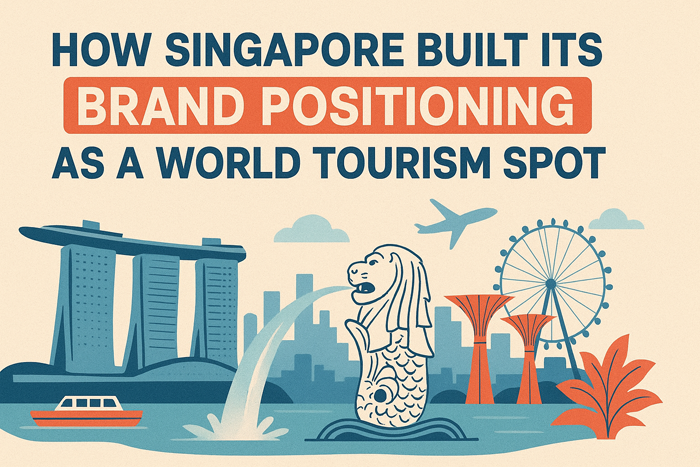
How Singapore Built Its Brand Positioning as a World Tourism Spot
Singapore almost immediately conjures up an image of the skyline of Marina Bay Sands, the rolling grounds of the Gardens by the Bay, the gross illumination, the different flavors, and a spotless, efficient road network. This tiny island country, just 734 sq km, has carved success as one of the most sought-after global tourism destinations in the world. But it just didn’t happen by accident; it’s a result of decades of strategic planning, branding, and experience design.
Let us delve into this powerful tourism brand crafted by Singapore.
1. A Clear and Consistent Brand Vision
The cleanliness and friendliness of the city hit home with the visitor and marked in bold the environment-conscious sentiment permeating its society. Tourists developed high expectations in terms of cleanliness, safety, and seamlessness in their access to what a traveler needs.
2. Turning Constraints into Strengths
Singapore may be small, somewhat lacking in natural mountains, and a lack of wide, open spaces, but instead of vying head on with competitors based on sprawling natural features, this country played up its strengths, one of which is world-class infrastructure, city attractions, and cultural diversity.
Through branding itself as a “city in a garden,” Singapore mixed urbanism and greenery. Parks, vertical gardens, and shaded tree-lined streets became a part of the city landscape — a somewhat unique proposition for those who wanted big-city energy and a touch of nature.
3. Strategic Investments in Signature Attractions
Tourism positioning is as much about what you offer as how you communicate it. Singapore invested heavily in attractions that would become global icons:
-
Marina Bay Sands: A luxurious hotel and entertainment complex instantly recognisable worldwide.
-
Gardens by the Bay: A futuristic park that embodies the “City in a Garden” vision.
-
Singapore Zoo & Night Safari: Pioneers in open-concept wildlife experiences.
-
Sentosa Island: A complete leisure and resort hub with beaches, theme parks, and luxury hotels.
These aren’t just tourist sites — they are brand assets that make Singapore stand out in competitive travel markets.
4. Leveraging Multiculturalism as a USP
Singapore is a mix of people that is ever restless in the flesh, and color that is white, while Indian and Eurasian are always at ease.
Diversity beautifully transcends all aspects of its festivals, architecture and in particular, its scene of eating.
These establishments are recognized by UNESCO as part of the intangible world cultural heritage.|The hawker ambiences make for a pocket-friendly and authentic Singaporean taste of the multicultural roots. For travellers, this means that they can taste a trip all around the world in a few days-an irresistible pull.
5. Safety, Cleanliness, and Efficiency as Core Brand Promises
In a world where travellers often weigh safety heavily in their decision-making, Singapore’s reputation for being safe, clean, and well-organised is a competitive advantage.
-
Low crime rates reassure solo travellers and families.
-
An efficient transport system makes getting around easy.
-
Strict laws and social discipline ensure public spaces remain clean and orderly.
These are pretty simple qualities but goes a long way and applies it directly to trust-one of the most significant elements of brand positioning.
6. Hosting High-Profile International Events
Singapore’s brand as a cosmopolitan, global city has been reinforced through high-visibility events:
-
Formula 1 Singapore Grand Prix — the world’s first night race on an F1 calendar.
-
Singapore Airshow — Asia’s largest aerospace and defence event.
-
Global business conferences — from tech summits to medical conventions.
These events put Singapore in the international spotlight and draw visitors who might not have otherwise considered it for leisure travel.
7. Digital Storytelling and Smart Marketing
STB has gone all in on data-driven marketing and digital storytelling to entice prospective travelers tested with the possibility of this kind of treatment. Unlike the general tourist ad, they have created separate and targeted campaigns for different markets – high-end shopping for Middle Eastern tourists, experiences in food for Southeast Asian view gettter.
Social media, including its social influencer partnerships, Instagram-able locations, and engaging online user experiences, makes Singapore visible and desirable.
8. Sustainability as a Future-Proof Brand Element
Recently, Singapore made sustainable tourism a larger part of its tourism brand. Eco-hotels, green transport projects, and similar initiatives are gradually making the city attractive to the increasing segment of globetrotters who think about the environment. Indeed, attractions like Gardens by the Bay, a large indoor waterfall in the new Jewel Changi Airport, and solar-powered attractions underscore the image of a very modern sustainable city.
9. Changi Airport: The First and Last Impression
The journey of every tourist starts approximately from the airport, yet in Singapore, travelers have already begun an adventure before they step outside of Changi Airport. Faultlessly included in the tourist trap are the butterfly house, movie theaters, worldwide shopping facilities with the unforgettable Jewel mall (including the artwork), pushing the flight from a mere transit point to one memorable event in itself.
In many ways, Changi is all that the visitors remember of the highly successful Singaporean appeal, pretty much from the time when they enter the country.
Final Thoughts
Singapore’s status as a prime world tourism destination isn’t manufactured overnight; it is born with such imagination, few strategic inputs, imbibed cultures, and valuable executions. Making consistent delivery of one’s brand promises as security, total cleanliness, cultural diversity, as well as iconic attractions will put up a global understanding place and an internationally effective image.
For tourists, it’s more than just a land they see-it’s a seamless, thrilling and fulfilling experience, then the matching of a strong tourism brand.